

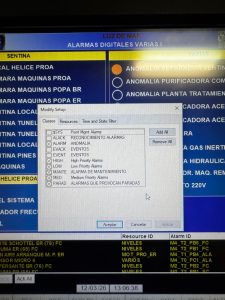
Many vessels still operate with legacy automation platforms installed more than two decades ago. One example is the Efansa AMS PMS alarm and monitoring system, integrated onboard ships during major automation upgrades in the early 2000s. Today, several of these systems remain operational even though OEM support, spare parts, and software maintenance are no longer available.
Our engineering team recently carried out a full repair and recovery project for an Efansa Alarm Monitoring System (AMS) and Power Management System (PMS). These systems are essential for supervising engine room equipment, alarms, and operational parameters across propulsion, auxiliary machinery, and electrical distribution.
According to the manufacturer, Efansa has specialized for decades in the development and programming of control equipment and automation systems for industrial and marine applications, providing integrated engineering solutions and custom built control platforms.
From a functional perspective , a marine Alarm Monitoring System continuously supervises the operational status of critical ship machinery and alarms. These systems collect and display real time parameters from engines, generators, steering gear, and auxiliary systems, ensuring crew are alerted immediately in case of abnormal conditions.
Alarm systems also centralize machinery alarms, engineer call functions, alarm logs, and event history, allowing operators to track and respond to failures quickly.
Service Scope
Our onboard automation service includes: System Health Check, Full Function Test, Alarm & signal verification, Electronic module repair, Controller HMI diagnostics, Commissioning and operational validation. Service can be performed directly onboard during shipyard stays or port calls.
Service Coverage EU Shipyards
Gdansk, Varna, Mangalia, Rijeka, Tuzla, Yalova, Burgas, Algeciras, Gibraltar, Cadiz, Ferrol, Gijon, Bilbao, Valencia, Burriana, Damen Rotterdam, Setubal
Marine Regulatory Compliance
For vessels operating under UMS (Unattended Machinery Space) notation and modern inspection regimes such as SIRE 2.0, alarm and monitoring systems must remain fully operational and verified. Under IMO SOLAS and ISM Code safety management practices, critical alarm and monitoring instrumentation should be periodically tested and calibrated, commonly during annual surveys or planned maintenance intervals (typically 12 months), to ensure reliable machinery safety monitoring and compliance during inspections.