Monthly Archives: March 2026

The Hidden Gem

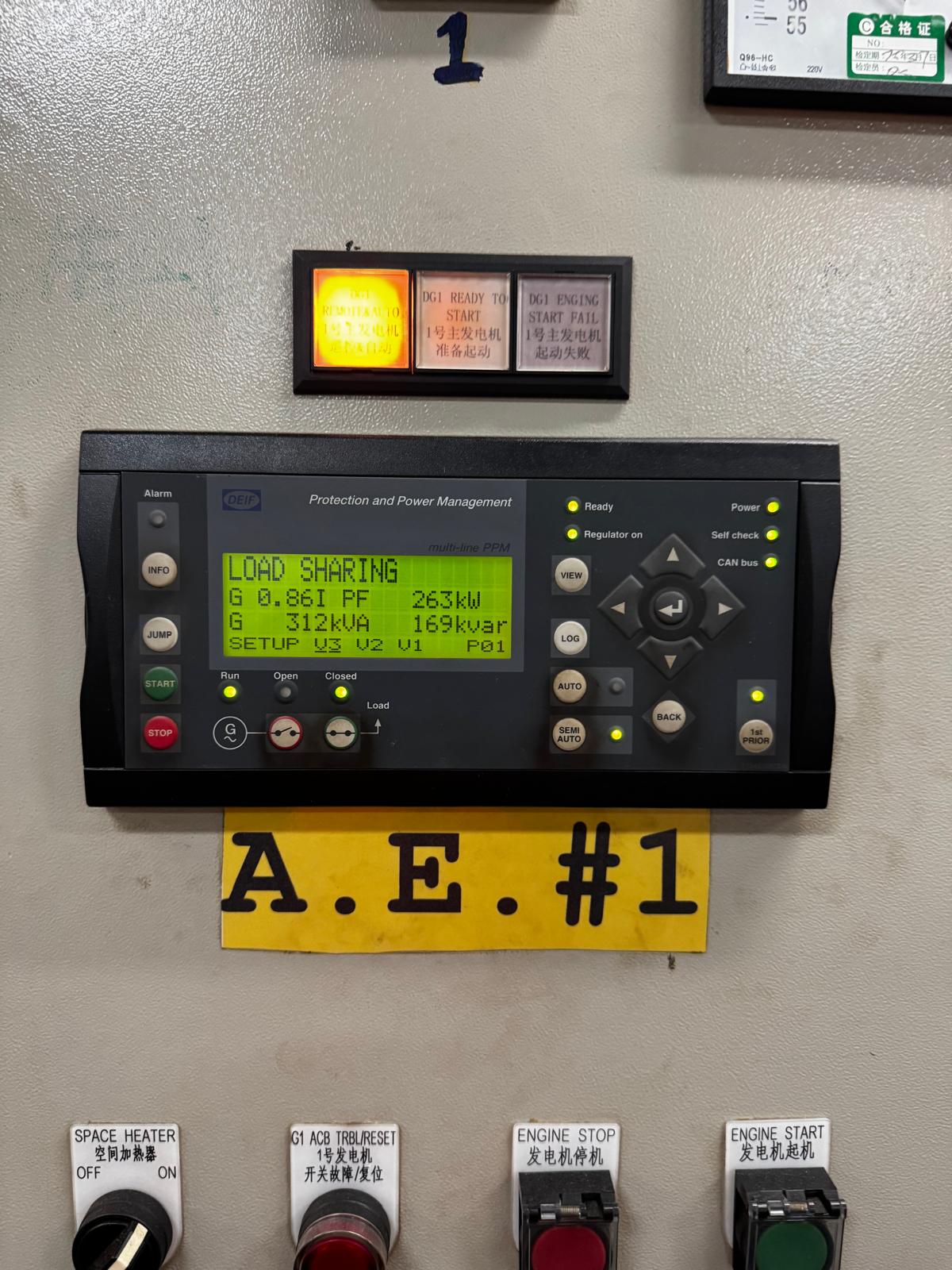
In a marine power plant with three 600 kW generators, a 2% voltage difference doesn’t just disappear when connected it converts into physical heat within the alternators.

Since the generators are sharing the kW load equally but have different voltages, the energy loss (in kW) comes from Circulating Current between them.

The Hidden Kilowatt Loss: Even if your ship load is constant, the engines must burn extra fuel to overcome the resistance of this internal current.

Estimated Loss: For a 2% voltage spread on 600 kW units, expect a continuous loss of 3 kW to 6 kW per generator (total system loss).

Fuel Impact: This equates to roughly 2 to 5 liters of extra fuel per hour (500 liters month ) just to maintain the “fight” between the two or three alternators.

Scope of Services
AVR & Excitation Alignment
Governor (GOV) & Speed Control
PMS Health Check (Power Management System)
Full Function & Protection Testing

Marine AVR (Automatic Voltage Regulator) Models
Basler Electric: DECS-100, DECS-150, DECS-250 (Digital), and the analog AVC series.
Leroy Somer: R230, R250, R438, R448, and the digital D510C or D550.
Caterpillar Perkins: VR6, CDVR (Digital Voltage Regulator).
Mecc Alte: DER1, DSR, UVR6.
Stamford AvK: AS440, MX321, MX341, and the digital DM110.
ABB UNITROL: Unitrol 1005, 1010, 1020.
Marathon Electric: DVR2000E, DVR2400.

Marine Governor (GOV) Models
Woodward: Digital: 723R, 2301D, Peak 150, and the Protective Control 505.
Hydraulic Mechanical: UG-8, UG-25+, 3161, and EGB series actuators.
Heinzmann: E6, E16, E30 actuators with Priamos or Pandora digital controls.
Cummins: EFC (Electric Fuel Control) and GCS modules.
GAC (Governors America Corp): ESD5111, ESD5500E series.
Barber Colman Woodward: Dyna 8000, Dyna Plus.
Volvo Penta MTU: Integrated ECU/EDC units (MDEC/ADEC) that interface with the PMS via J1939 CANbus.

Integrated PMS Load Sharing Modules
DEIF: Multi-line 2 (ML-2), AGC-4, AGC 150.
ComAp: InteliGen NT, InteliSys GSC.
Selco: T2000, T2100 Load Sharing Units.
Deep Sea Electronics (DSE): 8610, 8660 series.
 

Continue Reading →

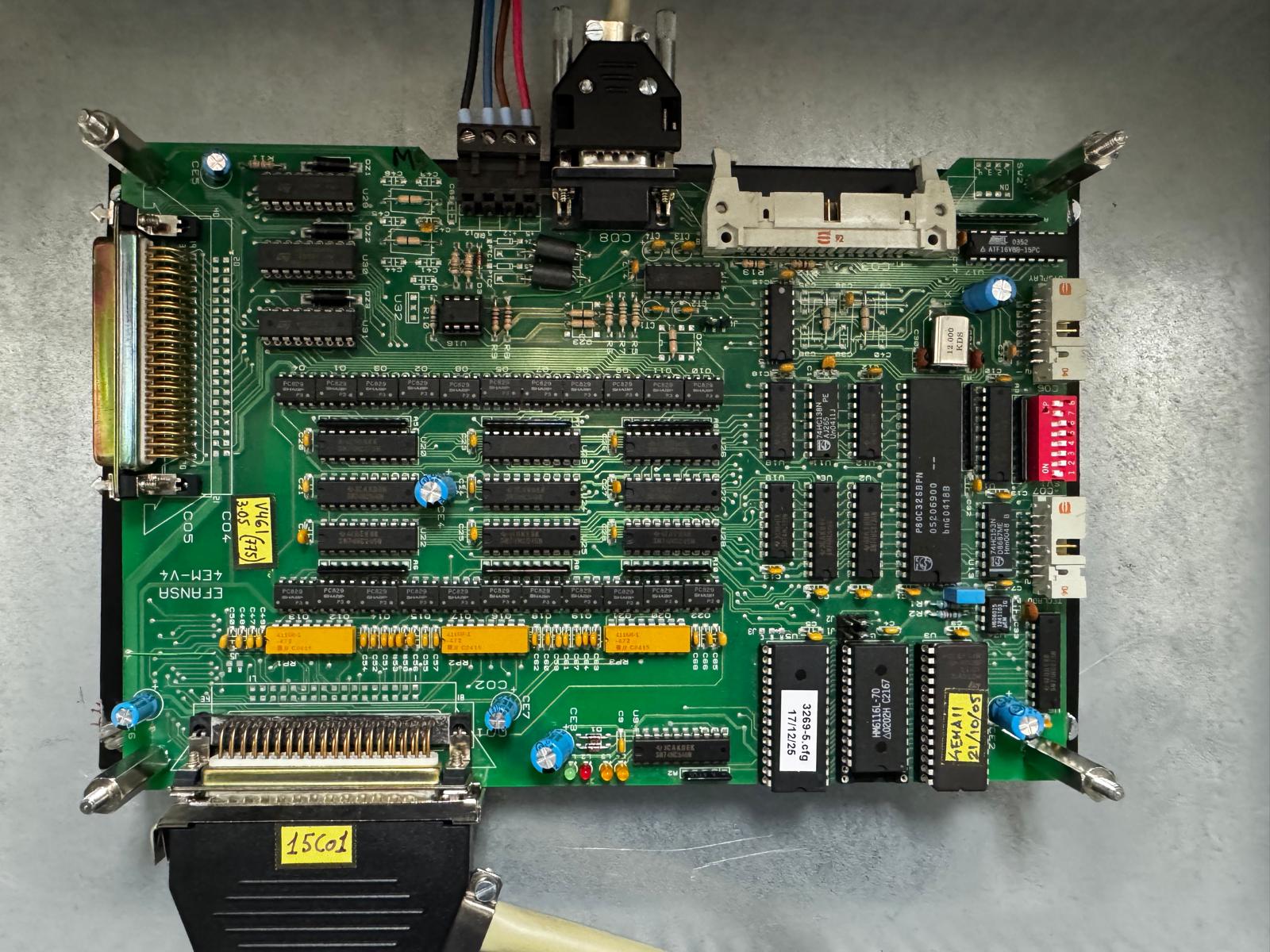
Many vessels still operate with legacy automation platforms installed more than two decades ago. One example is the Efansa AMS PMS alarm and monitoring system, integrated onboard ships during major automation upgrades in the early 2000s. Today, several of these systems remain operational even though OEM support, spare parts, and software maintenance are no longer available.

Our engineering team recently carried out a full repair and recovery project for an Efansa Alarm Monitoring System (AMS) and Power Management System (PMS). These systems are essential for supervising engine room equipment, alarms, and operational parameters across propulsion, auxiliary machinery, and electrical distribution.

According to the manufacturer, Efansa has specialized for decades in the development and programming of control equipment and automation systems for industrial and marine applications, providing integrated engineering solutions and custom built control platforms.

From a functional perspective , a marine Alarm Monitoring System continuously supervises the operational status of critical ship machinery and alarms. These systems collect and display real time parameters from engines, generators, steering gear, and auxiliary systems, ensuring crew are alerted immediately in case of abnormal conditions.

Alarm systems also centralize machinery alarms, engineer call functions, alarm logs, and event history, allowing operators to track and respond to failures quickly.

Service Scope

Our onboard automation service includes: System Health Check, Full Function Test, Alarm & signal verification, Electronic module repair, Controller HMI diagnostics, Commissioning and operational validation. Service can be performed directly onboard during shipyard stays or port calls.

Service Coverage EU Shipyards

Gdansk, Varna, Mangalia, Rijeka, Tuzla, Yalova, Burgas, Algeciras, Gibraltar, Cadiz, Ferrol, Gijon, Bilbao, Valencia, Burriana,  Damen Rotterdam, Setubal

Marine Regulatory Compliance

For vessels operating under UMS (Unattended Machinery Space) notation and modern inspection regimes such as SIRE 2.0, alarm and monitoring systems must remain fully operational and verified. Under IMO SOLAS and ISM Code safety management practices, critical alarm and monitoring instrumentation should be periodically tested and calibrated, commonly during annual surveys or planned maintenance intervals (typically 12 months), to ensure reliable machinery safety monitoring and compliance during inspections.

Continue Reading →